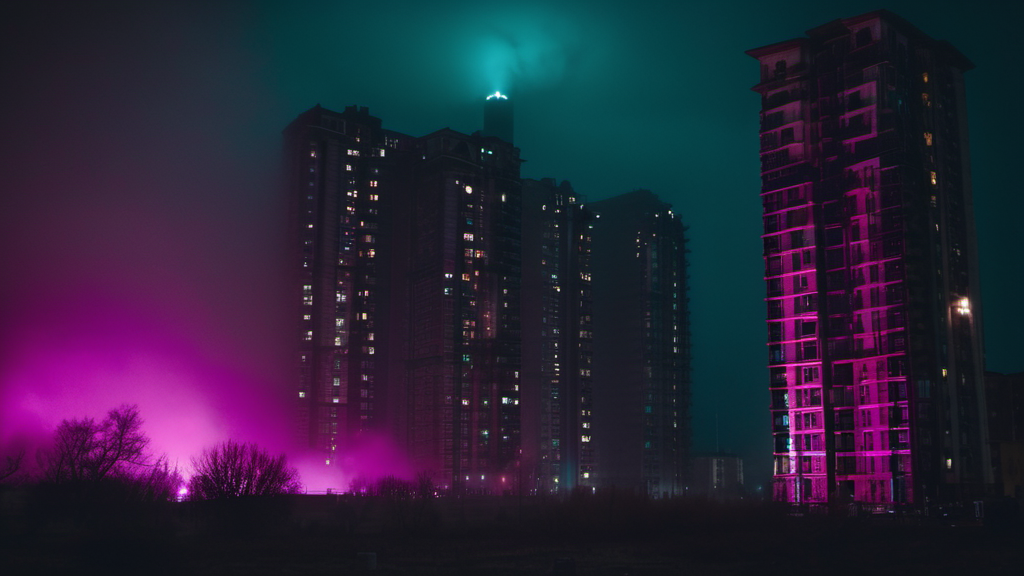
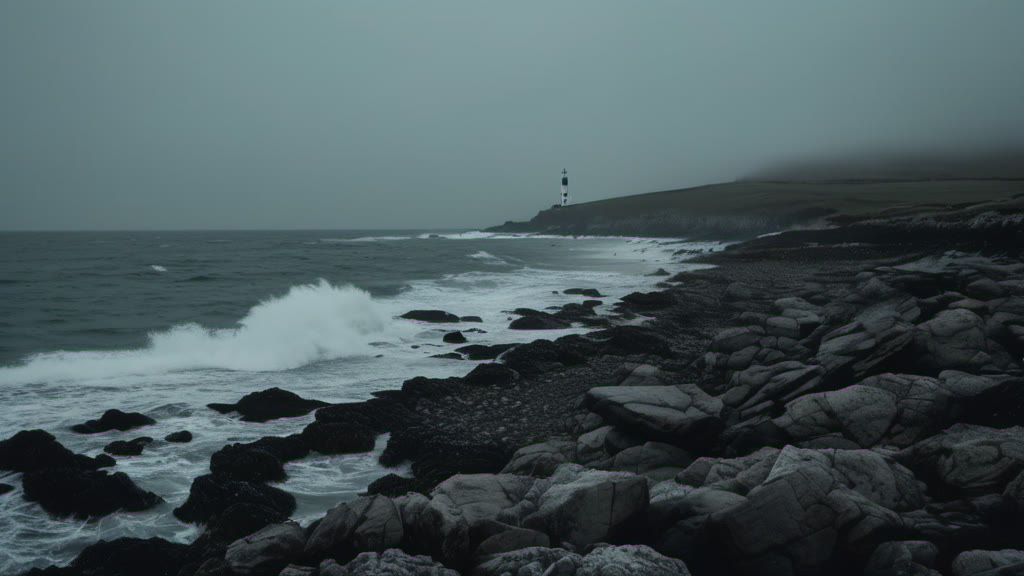
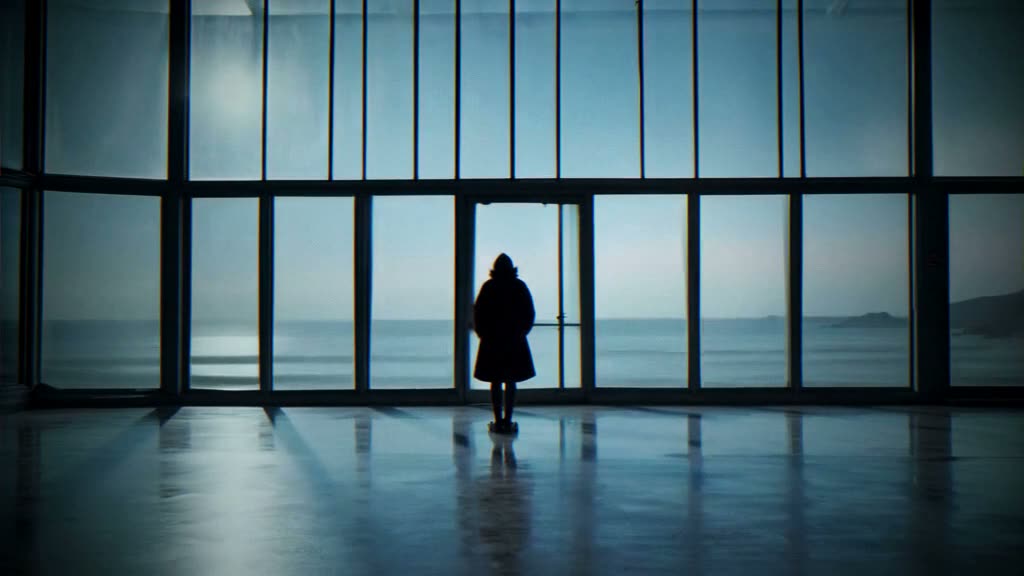
Sirens Calling Out — from musical input to a finished production.
A documentary where even the production team is struggling to justify its own employment.
BeginNot a demo, not a storyboard generator, not a prompt helper — the thing that decides what the film is, commissions the frames, measures the result and ships it.
The studio began with a cost problem. Subscription video generation bills by the second and holds the model, the settings and the output; a small production company cannot plan around that, cannot re-run a shot for free, and cannot keep its material local.
So the objective was concrete: build an affordable, locally operated production studio that removes the dependency on paid video generation — on hardware a working studio already owns. The machine here is a single RTX 3060 with 12 GB — 12,288 MiB — of memory, a Ryzen 9 5950X and 64 GB of RAM.
What that objective turned into was a general investigation: how a song is read and turned into a film, which models can actually run at home, what a camera instruction does to a latent, how to make an effect land on a beat without a human nudging every frame, and how to prove the finished file is correct rather than merely finished.
Run the whole chain — analysis, stills, motion, effects, edit, QC — on hardware a studio owns, with no per-second render bill, and the picture is made and stored there. The planning, prompts and analysis are remote inference, so "nothing leaves the machine" would be false; chapter 12 separates what stayed local from what did not.
3:45, 52 shots, 46 model plates, 2 h 28 min of GPU, a soundtrack that correlates with the source at 0.999737, and cuts within one to two frames of the measured grid.
No client work, no second song, no word-level lip sync, no identity-locked actor, no multi-GPU throughput. Section 15 lists the gaps without softening them.
The finished production, as delivered: 5,404 frames at 24 fps, 1024×576, with the original musical content preserved and encoded to AAC 320 kbps for delivery.
225.200 s delivered against 225.200 s of track.
At zero lag, over 10.8 million samples compared.
Found within 250 ms; mean error −0.030 s, worst −0.076 s.
Every clip equals round(seconds × 24); no drift.
The soundtrack was supplied, not generated. It arrived with its lyrics, tempo, key and section lengths written into the file's own metadata — which is where the film's words come from.
kelvin_stanley · the supplied MP3, unmodified
Two tempo figures, both true.
The analyser locks onto 92.29 BPM with 0.96 confidence; the file's own tag says 139. The relationship is two thirds, not half-time: half of 139 is 69.5, and two thirds is 92.7, which is what the tracker found. A 3:2 reading — the tracker following a subdivision of the notated pulse — fits the numbers, but the file alone cannot prove the cause; syncopation and the breakbeat's own accents are equally consistent with it. Neither number is corrected away here. The film works in bars (2.601 s each, the bar the measured grid supports), so the tempo question never reaches a cut.
The keys reconcile as a relative pair — F# major and D# minor share a key signature — but the label differs, and the difference is recorded rather than smoothed: the tag is the composer's statement, the analyser is a chroma estimate, and this page prints both.
An extended arrangement, cut down to a single.
The tag describes 256 bars: 32-bar verses and choruses, 48-bar breakdown and outro. At 2.601 s per bar that is roughly 11 minutes of arrangement. The file is 3:45 — 86.6 bars — so the delivered edit is a shortened cut of the supplied form, and the film is built to the edit, not to the tag's nominal lengths.
The seven-section map the shot list uses (intro 0–30 s, verse 30–83 s, chorus 83–108 s,
breakdown 108–138 s, verse 2 138–164 s, chorus 164–192 s, outro 192–225.2 s) is the
editorial map stated in scripts/sirens_shots.py. The analyser independently
segments the same audio into twelve windows — a finer reading of the same song, shown in
section 06.
From the MP3's
lyrics-eng tag, unedited. Section headers carry the bar count and the
delivery note.
loading…
Four kinds of contributor, and one of them did nothing at all. The distinction matters commercially: orchestration intelligence, generation engines and deterministic software are different products with different costs.
Founder, LB Productions. Conception, creative objectives, the musical input and its lyric sheet, the technical constraints, production feedback, identification of visual problems, and approval of the delivered film.
The four constraints that shaped every decision: keep the track untouched; no invented camera moves; no paid API, cloud GPU or new model; UK-commercial licensing.
Software engineering and technical direction; creative interpretation and the visual identity; the 52-shot storyboard; every prompt; engine evaluation; production scheduling and resumable orchestration; troubleshooting; the reactive-effects layer; the edit; the QC harness.
Written in session, as code and as prose — not sampled from a model at run time.
The studio is wired for a local model (qwen3.5:9b)
and the story modes use it. This production did not: its request log records no inference
on 27 November.
87 inference calls in the log, all on 25–26 November. On the day of the film: four requests, none of them inference, no model loaded.
Reported by the founder as part of development planning and technical consultation. The repository holds no transcripts, exports or artefacts from it.
Founder-reported, not archive-verified. It is therefore excluded from the evidence chain and supports no claim on this page.
ComfyUI executes the graphs; SDXL 1.0 makes the 46 stills; LTX-2.5 Image-to-Video turns each still into 2.6–5.4 seconds of motion at 1024×576 and 24 fps (the 46 plates run 2.6–5.43 s, mean 4.5 s).
Pixels only. They receive prompts, seeds and stills, and return frames — they make no narrative decision.
Audio analysis, the bar grid, the reactive layer, the grade and transitions, the concat, the mux, the upscale, and every QC measurement.
Same inputs, same bytes. This is where the film is made exact — and where a defect is caught by arithmetic instead of by eye.
| Layer | What it decides | Interface in this production |
|---|---|---|
| Orchestration intelligence | What the film is; which shot at which second; which engine; what a failure means; when the output is wrong | Session reasoning → scripts/sirens_shots.py, scripts/sirens_film.py |
| Generation engines | Pixels, given a prompt, a seed and a still | ComfyUI HTTP API → modules/generation/image_gen.py, engines/ltx25.py |
| Deterministic software | Exact timing, effects phase, frame counts, delivery format, QC verdicts | reactive_layer.py, ffmpeg filter chains, sirens_qc.py |
No shot list, no mood board and no references were supplied — only the track, its lyrics, the genre and the constraints. The interpretation below is the agent's.
The first interpretation was wrong, and the archive keeps it.
The earliest drafts read “sirens” as a coast: a stormy shoreline, wet basalt, a lighthouse, a lone figure at the water. It is coherent, it is beautiful, and it ignores most of the lyric. The lyric is a city — towers, wet tar, gas masks, paper chains, copper wire, plastic smiles — with the sea at the end of a street, not at the centre of the film.
The second reading moved the film into the city and kept the sea for the two choruses and
the last image, so that the chorus arrives as escape rather than as scenery. The abandoned
frames are still in reports/film/_superseded/, and one of them is beside this
text.
The track, its lyric sheet, tempo, key, section bar counts, delivery notes and genre description. Plus four production constraints and the delegation of creative control.
Night city, cyan and sodium and magenta, wet surfaces, haze; the narrator as a coat and a silhouette with no face; the sea reserved for the chorus; surveillance, decay and crowds as the lyric's own furniture.
Bar 2.601 s, downbeats, cut points, shot lengths, effect phase and all QC verdicts. None of this is a creative judgement; it is arithmetic on the supplied audio.
The working title of the film was “White Sirens”. The hook is “Bright sirens calling
out to the sea” — and the evidence was in the file all along, in its lyric tag. Local
speech recognition could not recover it: with voice-activity detection it returned one
segment, “Thank you.”, having removed 3 m 43.9 s of a 3 m 45.2 s track, and without VAD it
heard “Fights are around, calling out to the sea”. The correction is recorded in
documentary_archive/CORRECTIONS.md.
Everything the picture does on a beat is derived from numbers extracted from the supplied file. The waveform above is the real track: cyan is level, magenta is the low band, the ticks are detected beats, the bands are the seven sections.
What the analysis produced
What it could not do
Vocal analysis failed on the real material, and the failure is documented rather than hidden. The voice-activity detector treated a dense sung mix as non-speech and removed 99.4 % of the track; the transcription that survived was one segment. Without VAD the transcript is a recognisable but wrong reading of the lyric.
Nothing in the film depends on that transcript. The lyric came from the file's tag, and the effects are driven by band energy — not by phonemes. A word-level sync would need a different approach entirely; section 12 says so.
| Source | Segments | What it is | Used for |
|---|---|---|---|
| MP3 lyric tag | 7 | The composer's arrangement: 32/48-bar sections | The lyric, and the film's narrative arc |
| Measured analysis | 12 | Energy/brightness segmentation of the delivered audio | Section shading in the waveform; no cut depends on it |
| Production map | 7 | Editorial windows fitted to the 3:45 edit | Which shot sits in which part of the song |
Detected interval; 347 beats and 87 downbeats across the track, each a candidate cut and an effect phase.
Every shot boundary is snapped to a measured downbeat or its half-bar. No cut is placed by eye.
Cost of the deterministic effects pass, against ~193 s for the plate it sits on.
The strip below is the actual cut, each block as wide as its slot. Click a shot to read its prompt, seed, frame count, render cost and purpose — the same record the pipeline used.
s01
—
—
Still → delivered frame
Drag the divider. On the left is the SDXL still that seeds the shot; on the right is the frame as delivered, after the model's motion, the deterministic layer and the grade. This is the whole transformation the pipeline performs on a composition — everything else is timing.
SDXL still
Delivered
Before committing 46 renders, the studio rendered the same 8.042 s of the song five ways — same still, same seed, same window — and measured what each engine actually did.
Weights, licensing, memory floor and conditioning paths established before any download.
Byte-verified and runnable on 12 GB, via ComfyUI graphs built in code.
Its community licence excludes the EU, the UK and South Korea — unusable for this production regardless of quality.
46 plates at 1024×576, two-stage distilled, camera locked off by prompt.
| Candidate | Render | s per output s | Beat r (lag 0) | Frame diff | Flow px |
|---|---|---|---|---|---|
| LTX-2.5 audio-to-video | 329.4 s | 41.0 | 0.017 | 2.64 | 0.011 |
| LTX-2.5 image-to-video | 323.1 s | 40.2 | 0.003 | 3.10 | 0.008 |
| LTX-2.5 first/last frame | 346.9 s | 43.1 | −0.009 | 2.72 | 0.000 |
| Wan 2.2 image-to-video | 1,090.5 s | 135.6 | −0.017 | 1.09 | 0.074 |
| Procedural layer only | 20.3 s | 2.5 | −0.009 | 3.53 | 0.036 |
The audio branch does not synchronise the picture.
Audio-conditioned and deaf renders differ by about 8 parts in 255 per pixel, and their activity series correlate at 0.973 — the same film with noise. Against the measured onset envelope, the audio-conditioned clip correlates at 0.017 and the unconditioned one at 0.003. Both are indistinguishable from zero.
That is why the sync is not asked of the model. The picture is cut on the measured grid and the effects are driven by band envelopes, because that is where exactness can be had.
Image-to-video was then chosen over audio-to-video for the film: it costs the same (323.1 s against 329.4 s), it needs no audio encode or early mux, and it produces the same picture without implying a synchrony that is not there.
And the engine invents a camera if you let it.
Given a description of a still, LTX-2.5 at cfg 1.0 adds a move and warps the geometry to sell it: on the first shot, tower blocks rotated through about 30° in five seconds. A stabiliser cannot undo that, because the rotation is in the pixels.
The fix is in the prompt. Every plate carries a locked-off instruction, a per-shot motion clause, and an explicit prohibition of tilt, pan, zoom and parallax. The brief forbids faking a camera with a crop — so the frame is a tripod, and the motion happens inside it.
# every plate prompt, without exception
Locked-off static tripod shot, the camera is
completely still. <content> <motion>.
No camera movement, no tilt, no pan, no zoom,
no parallax. Structures and surfaces stay
rigid and upright; nothing warps, stretches
or morphs.
An RTX 3060 with 12 GB — 12,288 MiB of dedicated VRAM — a Ryzen 9 5950X and 64 GB of RAM. No cloud GPU, no queue, no rental. Everything below is measured on the machine that made the film.
46 clips, 2 h 28 min of GPU. Mean 192.9 s; fastest 119.3 s; slowest 387.9 s — the first clip after the model load.
Seconds of GPU per second of plate footage: 8,872.4 s of render for 206.982 s of plates. The 8.042 s engine window measured 41.0 s/s; the mean plate spent 192.9 s making 4.5 s.
Peak across the 46 plates (mean 12.46 GB); 54.12 GB of system RAM beside it (mean 52.85 GB). ComfyUI's system stats, sampled every 2 s — a pool that includes shared GPU memory on Windows, so it can exceed the card's 12 GB. Chapter 12 names the metric.
All 52 layered clips in ~5.5 min, then edit and 1080p encode in ~6 min. No model involved.
| Stage | Wall time | Bound by | Re-runnable for |
|---|---|---|---|
| 46 SDXL stills | unknown | GPU sampling, 30 steps at cfg 6.5 | Per-still times were lost when manifest.json was deleted mid-production |
| 46 LTX-2.5 plates | 8,872.4 s | GPU sampling, two-stage distilled | — |
| 52 layered clips | ~330 s | CPU ffmpeg + librosa | Nothing |
| Edit + 1080p encode | ~360 s | x264 at crf 16/18 | Nothing |
The ceiling is resolution and clip length, not ambition.
At 12 GB the model's practical output here is 1024×576 and up to about five and a half seconds per plate — the longest of the 46 is 5.43 s, and 33 of them fall between 5 and 6 s; the 1080p master is a lanczos upscale of the delivery, not a second render, and this page says so wherever it quotes it. Shots longer than a single plate are covered by more cuts, not by longer generation.
That is a hardware statement, not a software one. The pipeline already asks for exactly what the engine can give: frame counts snapped to the 1+8k lengths LTX accepts, prompts that forbid the camera, and a trim table measured from the plate that came back.
Nothing in this list has been run. It is what the measurements above imply a larger card would change, offered for a hardware conversation and not as a result:
A one-frame error per clip, fifty-two times, is a film out of time with its own music. It was found by measuring the delivered file, not by watching it.
The layer muxed each clip back to the length of the audio instead of keeping the frame it had just written, so all 52 clips were one frame short. The head trim then computed negative and clamped to zero on every shot, and the deficits accumulated into an early drift.
The fix was structural, not cosmetic: the video is the clock, the settle is removed as an
explicit skip measured from the plate, and the edit is frame-exact. Every clip now equals
round(seconds × 24); 52 of 52, no mismatches.
| Measure | First master | Delivery |
|---|---|---|
| Duration | 223.708 s | 225.200 s |
| Frames | 5,369 | 5,404 |
| Cuts within 250 ms | 7 / 51 | 47 / 51 |
| Mean cut error | −0.177 s | −0.030 s |
| Worst cut error | −0.242 s | −0.076 s |
| Unplanned changes | 20 | 1 |
| Black spans | 2 | 0 |
| Check | Result |
|---|---|
| Duration | 225.200 s against 225.200 s — error 0.000 s |
| Soundtrack identity | r = 0.999737 at zero lag over 10,809,600 samples; relative energy error 0.6 % |
| Cut accuracy | 47 of 51 within 250 ms; mean −0.030 s; worst −0.076 s (one to two frames) |
| Unmatched planned cuts | 4 of 51 — 5.434, 10.634, 57.447 and 161.471 s, all low-contrast cuts; frame counts are exact, the detector cannot separate them. It also flagged one unplanned luminance change at 154.083 s, a flash inside a shot. Four misses plus that one extra flag is where an earlier "five undetected" came from |
| Black / frozen | One black span, 223.87–225.12 s, which is the intended tail fade; no frozen frames |
| Per-shot luma | 2.7 (tail fade) to 149.4 (dawn skyline) — no shot is accidentally black |
| Procedural water | Luma 32.7 and 32.4 after a rewrite; both read as water rather than as a black frame |
| Container | h264 yuv420p 1024×576 · 24 fps · 5,404 frames · AAC 320 kbps 48 kHz |
| Stream lengths | Video stream 225.166 s (5,404 ÷ 24 = 225.1667 s); audio and container 225.200 s. The picture ends 33 ms before the audio, which is what muxing the supplied track as the clock does — the 0.000 s duration check is against the track, not against frame count × frame rate. |
| Human viewing | The founder watched the delivered file in full, and playback of all 225.200 s is confirmed; his notes are recorded separately and not yet folded back into a recut. Kelly, an invited first viewer, gave positive feedback — her comments are withheld until she gives permission to publish them. A written note-by-note editorial pass is still outstanding |
The hook was misheard in the working title. The MP3's lyric tag carries the correct line,
and local ASR could not recover it — VAD returned “Thank you.”, no-VAD returned “Fights are
around”. Recorded in CORRECTIONS.md.
-shortest made every layered clip one frame short, so lead clamped
to zero on all 52 shots. The first master ran 223.708 s instead of 225.200 s. The settle is
now removed in the layer from the plate's measured length.
A broadcast error in the smoke base survived the “fix”, and shot s29 sat as a 261-byte
stub that later passes skipped because they test exists(). Fixed in the branch
that raises it; the stub is recorded, and the skip guard remains an open gap.
A per-sample peak difference can never be met by a 320 kbps AAC encode. The verdict now requires zero lag, r > 0.999 and energy error under 1 %, with both peak figures printed beside it.
This is the commercial claim, stated as narrowly as the evidence allows: one complete broadcast-format music video, made locally, measured end to end, reproducible from four files.
46 model plates and 52 layered clips cost GPU hours on hardware the studio owns — 2 h 28 min for the picture — rather than a per-second render bill, and a re-render is a decision about time. The agent's inference runs remotely and is the one line this repository cannot quantify; chapter 12 says what is confirmed and what is unknown about it.
Unreleased audio, stills and frames are rendered and stored on the machine. The lyrics, the brief and the plan are processed by remote inference — so the honest boundary is "media local, direction remote", and that split is what a label or agency would have to negotiate.
Duration, soundtrack correlation, cut accuracy, black and frozen frames, luma per shot. The same harness that caught a 1.5 s drift can sign off a delivery.
What Freebuff was used as
Not a code assistant that was occasionally asked for creative advice. The agent held the production: it read the song, decided the film, wrote 52 prompts, chose and justified the engine from a measured comparison, wrote the effects layer and the editor, found its own defects by measurement, and documented the result to the standard an auditor would ask for.
That is a different product surface from “generate code”: it is a production intelligence that can operate a toolchain it also builds, and be held to numbers.
Who this is interesting to
46 plates at 1024×576 with per-clip wall time and peak memory, on a 12 GB consumer card. What we would test with more VRAM: native 1080p generation, longer takes, more takes per shot — with the same telemetry.
The same 8.042 s window, five engines, fixed seed, published measurements. A repeatable comparison a vendor can run on any card and publish without cherry-picking a still.
An application where the agent is accountable for an artefact, not a diff: storyboard, prompts, engine choice, orchestration, QC and the documentary record of its own decisions.
One film, one song, one machine, one operator. No client work, no revenue, no second artist, no multi-GPU or multi-user throughput, and no measurement of what a human editor's time saves or costs against this pipeline. The honest commercial claim is a demonstrated capability with unusually complete evidence — not a business with a track record.
One half of this film ran as remote inference on someone else's hardware. The other half ran on a card in a spare room. Both halves are below, with what is known about each — including how little is known about the remote half's metering.
The cover used to say zero cloud spend. True of the picture, false as a sentence. All 5,404 frames were rendered on the studio's own RTX 3060; no cloud video service was called. But Freebuff — which read the song, planned the fifty-two shots, wrote the prompts, chose the engine and audited the delivery — is remote inference over a network. How that inference is metered or billed is not established by anything in this repository. The precise claim is zero paid cloud video generation, locally rendered, Freebuff-directed, and it is used wherever this production describes its cost.
The reading is deliberately narrow: the platform supplies the intelligence, the customer supplies and funds the rendering. That is a different business shape from services that bill per rendered second, and it is the shape this production actually demonstrated — not a claim about what Freebuff has agreed to provide.
| Line | Evidence | Status |
|---|---|---|
| Cloud image or video generation | No paid endpoint, no API key and no per-second service anywhere in the production path; every clip came off the local card | 0 |
| Cloud GPU rental | The same path — no rented instance was used for a still or a clip | 0 |
| Local GPU rendering | 46 plates, 8,872.4 s of wall time, mean 192.9 s; peaks 12.79 GB device memory and 54.12 GB RAM; layer 330 s, edit 360 s | measured |
| Local language model | Ollama's own request log: 143 lines, 87 of them inference, none on the day the film was made | 0 tokens |
| Remote language model — Freebuff | Confirmed consumption: interpretation, planning, prompting, engineering and audit were performed remotely. No usage record, token count, credit figure or charge exists anywhere in this repository, and no metering or billing arrangement is established here | unknown |
| Electricity | 0.343 kWh for the plate renders at the sampled 139.34 W at 97 % utilisation — one sample, not a meter, and the draw is assumed to have held | estimate |
| Electricity, illustrated | ≈ £0.093 at an illustrative £0.27 per kWh — arithmetic on the estimate above, chosen to show the order of magnitude. Not part of any total, and it excludes CPU, stills, post-production, hardware and inference | illustrative |
| Tariff and hardware | No real energy price and no purchase price is recorded, so neither a bill nor a depreciation figure can be stated | unknown |
| Software | ComfyUI, SDXL 1.0, LTX-2.5, FFmpeg and librosa — no licence fee sits in the production path | 0 |
| Human time | Kelvin's brief, constraints, direction and approval; the hours were never logged | unknown |
The 12.79 GB figure is the highest of 46 per-shot samples of ComfyUI's /system_stats
vram_total − vram_free, in decimal GB, polled every two seconds while a plate
rendered (109–192 samples per shot). It is not torch.cuda.max_memory_allocated(),
and it exceeds the card's 12.288 GB of dedicated VRAM because the Windows driver reports shared
GPU memory inside the same pool. Across the 46 plates the mean is 12.46 GB of device memory and
52.85 GB of system RAM; the maximum system RAM is 54.12 GB. The 193-frame engine-comparison
clips — a separate run on the same sampler — peaked at 12.45 GB and 53.44 GB across the four
model candidates (11.85–12.45 GB device memory, 50.94–53.44 GB RAM). Two earlier pairs are
withdrawn rather than restated: 12.45 / 53.27 GB, a near-mean reading with a RAM figure that
does not reproduce from the current manifest, and 12.5 / 54.7 GB, which appears in no stored
record.
The wattage is a single entry in
HARDWARE_PROFILE.json: 139.34 W at 97 % GPU utilisation, sampled on 26 November at
00:05. No meter ran during the render. 8,872.4 s × 139.34 W is 1.236 MJ, or 0.343 kWh if that
draw held — an estimate with its assumption on the page, not a measurement of energy.
The work was done over a network, so remote inference consumption is confirmed. Nothing in the project records how that consumption is metered or billed: no session export, no usage dump, no credit ledger, no per-request token counts. The repository holds production logs — ComfyUI, FFmpeg, Ollama, QC — and not one of them can see the agent.
Nor does consumption imply a charge to this customer. Remote inference may be bundled, subsidised, plan-limited or billed separately; this document cannot tell, and does not assume.
The archive makes the first distinction countable even without tokens: 101 entries and 359 evidence files across 20 recorded sessions between 26 and 27 November, of which the film's own path is the most recent five (6q–6u). It cannot say how many tokens each one spent.
While LB Productions can measure the local computational resources required to deliver a completed production, the remote AI inference consumption remains unavailable within our production records.
We would welcome collaboration with Freebuff's development team to establish these figures and jointly investigate the commercial viability of agent-led creative production as an additional application of the Freebuff platform.
By combining Freebuff's inference measurements with LB Productions' documented production benchmarks, both parties could establish the relationship between creative orchestration, computational expenditure, production throughput and potential commercial value.
A software project can reach a stable release; the next song is a different song. New releases, videos, campaigns, short films, advertising, social content, effects sequences and educational work would each need fresh interpretation, planning, prompting, orchestration and QC — the work this film shows the agent doing.
Nothing in it required Freebuff to rent a GPU, hold a queue or fund the sampling: 2 h 28 min of local rendering happened on equipment the customer already owned.
The recurring cost of the local half is electricity and time, not a per-second bill; a re-render is a decision about time. Audio, stills and frames were rendered and stored on the machine, while the lyrics and the direction were processed by remote inference — the privacy boundary a label or agency would have to negotiate before this workflow is allowed.
Reusable workflows should also cut inference per production: this film reused its engine comparison, prompt structure and QC harness instead of re-deriving them. Sustainable value, not maximum token consumption, is the point.
No cost per film can be stated from this evidence. The inference bill is invisible from here, the electricity price is unrecorded, the hardware was already owned, and the operator's hours are unknown — so the honest output is a measured compute figure (8,872.4 s of local wall time for 225.2 s of film), a derived energy estimate and a demonstrated shape of the transaction, not a price. One film, one song, one machine, no client, no revenue. Freebuff's own pricing, margin and operating cost are not ours to know or to publish, and nothing here should be read as a statement about them.
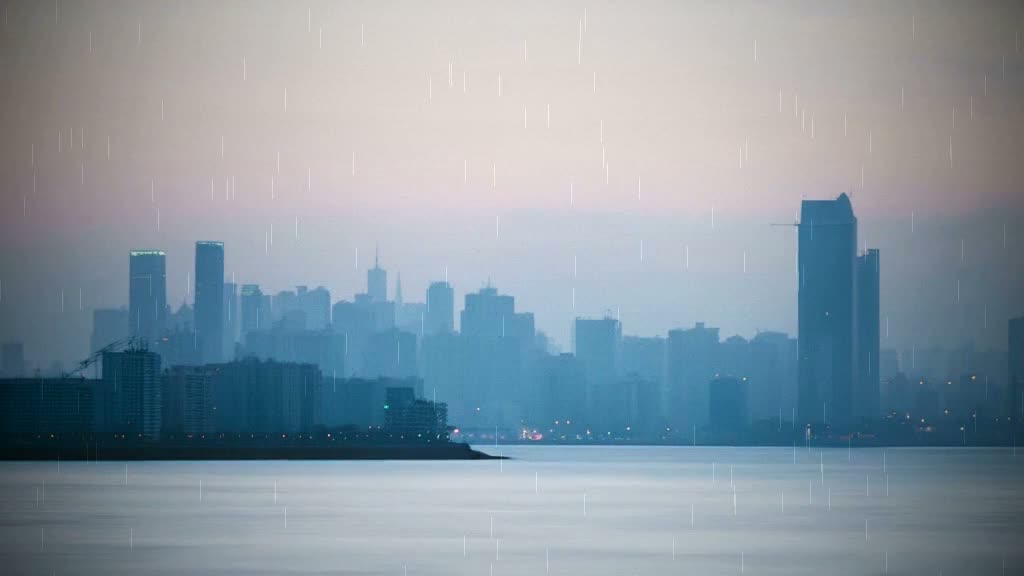
This was not commissioned. It began as one user asking whether a software agent could help build a small studio, and it ended with a finished film and the records to prove how it was made.
No brief from Freebuff, no marketing team and no staged environment. An independent operator installed the agent on his own workstation, asked it to help build an affordable AI production studio, and held it to the result: 52 shots, 5,404 frames, a soundtrack that matches its source at 0.999737, and a documentary record of every failure on the way.
That origin is the asset. A commissioned demo shows what a product does when someone is paid to make it look good. This shows what it did when nobody was watching the camera — including the afternoon it produced a 261-byte stub and four later passes skipped it as finished.
Customer success stories, promotional campaigns, product demonstrations, developer-community engagement, social advertising.
Creative-industry outreach, conferences and technology talks, documentary collaboration — audiences that do not normally read a coding-agent changelog.
A measured workload at 12 GB makes a natural hardware-partnership announcement, with per-clip wall times and peak memory already published.
Every image in that spot is either the delivered film or a real production record: the prompts, the engine table, the 261-byte stub, the QC numbers. It can be assembled from the repository as it stands.
The story also has the shape advertising rarely gets for free: a person trying to do something expensive without money, and a tool that turns out to be the thing that makes it possible — then admitting, on camera, where it failed.
It is not a claim that Freebuff has endorsed this project, agreed to use it, or participated in it. No monetary value is assigned to the marketing opportunity — not a reach estimate, not an impression count, not a media value. What is offered is a documented, self-initiated use case that Freebuff may use or ignore, on terms it sets. The campaign concept above is a draft that would run only with Freebuff's agreement.
Not a faster card — a wider range of things that can be attempted, with an honest line between what has been measured and what has not.
Professional-grade GPU access would not guarantee superior visual results. It would expand the range of technically achievable production workflows, allowing LB Productions to investigate models, conditioning techniques, native resolutions and production methodologies that are currently constrained by consumer-grade hardware.
The proposed investment is therefore an expansion of research and development capability rather than simply an upgrade in rendering performance.
| Capability | The workstation, today | Proposed target | Status |
|---|---|---|---|
| Dedicated VRAM | 12,288 MiB (RTX 3060) | 96 GB (RTX PRO 6000 Blackwell) | 8× capacity |
| Model residency | 21.5 GB int8 transformer streamed from 64 GB RAM; 54.12 GB RAM peak | bf16 model resident, no streaming | proposed |
| Native resolution | 1024×576; 1080p is a Lanczos upscale | 1920×1080 native — 3.5× the pixels | proposed |
| Clip length | 193 frames (8.04 s) practical; film plates 65–161 frames | 300–600 frame takes | proposed |
| Conditioning | layout or identity or first/last, one at a time in practice | identity + layout + depth in one graph | untested |
| Throughput | 42.9 s of render per second of plate footage | unknown until measured | no data |
| Energy | one 139.34 W sample; ≈0.343 kWh estimated for the plates | unmeasured | no data |
Five of the twelve restrictions in the register are capacity: the streamed model, the 1024×576 ceiling, the 193-frame clip, mandatory int8, and a layout pass that fills the card at 49 frames.
Audio conditioning does not synchronise (onset r 0.017). Identity is weak (0.33–0.50). Layout loses the second actor late. All three were measured with the memory they asked for; a bigger card is a chance to re-test, not a repair.
Whether identity, layout and first/last compose in one graph; whether native 1080p improves face consistency; whether 96 GB is faster per output second at all. Nothing in this repository answers any of them.
Category A — identical models, prompts, seeds, resolutions and frame counts on both machines: how much faster is the same work, at what peak memory?
Category B — what becomes possible: bf16 resident, native 1080p, 300-frame takes, composed conditioning, two characters held, Blender-authored motion. Reported separately, never summed into one number.
The proposal is collaborative benchmarking access — loaned hardware, sponsorship or a partnership — not a purchase request. No arrangement exists or is implied.
The next question is what becomes possible with 96 GB. The registers
behind this chapter — the twelve current limits, the two benchmark programmes, ten historical
experiments and the staged access path — are in reports/hardware_envelope/, and
every one of them is written to be checked rather than believed.
A pitch that lists only strengths is a brochure. These are the gaps, in the order they would matter to a client.
exists(), so a truncated clip would be skipped again.| Gap | What it would take | Why it matters |
|---|---|---|
| Word-level sync | Forced alignment of the vocal, then per-word timing driving cuts or mouth shapes | Makes the edit feel sung rather than scored |
| Identity | Reference conditioning (IP-Adapter or a trained subject) held across plates | A performer the audience can recognise across shots |
| Full settle trim | Re-render 45 plates with head room (~2.5 h) | Removes the model's first frames from every shot |
| Resolution | More VRAM, or a tiled second pass | Native 1080p instead of a lanczos upscale |
| Human review | A written viewing pass with notes, then targeted re-renders — the founder has watched it once | Pacing is the one thing arithmetic cannot judge |
This page is generated from the production archive, not written from memory. Each figure traces to a file below.
| Claim | File |
|---|---|
| Delivery, duration, frame counts | output/sirens_calling_out/sirens_calling_out_1024x576.mp4 + qc.json |
| 52 shots, cut times, trim table | reports/film/sirens_calling_out/timeline.json |
| Per-shot seed, frames, wall time, memory | reports/film/sirens_calling_out/manifest.json |
| Tempo, beats, sections, bands | projects/20261127-085708-sirens-calling-out-f37d/analysis/audio_analysis.json |
| Engine comparison and measurements | reports/engine_evaluation/sirens_20261127/ |
| Attribution and the Ollama log audit | reports/film/sirens_calling_out/FILM_REPORT.md |
| GPU model, VRAM and the 139.34 W power sample | HARDWARE_PROFILE.json |
| Sessions, decisions and corrections behind the cost split | documentary_archive/INDEX.json |
| The inference data requested from Freebuff | reports/film/sirens_calling_out/FREEBUFF_DATA_REQUEST.md |
| Partnership proposal, economics and campaign concept | reports/film/sirens_calling_out/PARTNERSHIP_PROPOSAL.md |
| Corrections, decisions, narration | documentary_archive/ |
| Superseded concepts and failed renders | reports/film/_superseded/ |
# from the supplied track python scripts/sirens_film.py plan python scripts/sirens_film.py stills python scripts/sirens_film.py render python scripts/sirens_film.py layer python scripts/sirens_film.py edit python scripts/sirens_qc.py # regenerate this page's data python scripts/sirens_pitch_data.py
The film was produced in session 6r on 27 November 2026 and committed to the repository with its archive. The track is the founder's own file, supplied for the production and used unmodified, then encoded to AAC for delivery. Its metadata records that it was made with Suno, and Suno's commercial-use terms for this track have not been verified in this repository: external distribution of the audio remains an outstanding rights check for the founder, not an assumption of this document.
Stills: SDXL 1.0 under CreativeML Open RAIL++-M. Video: LTX-2.5 under the LTX-2.x Community Licence (worldwide; paid agreement above the revenue threshold). HunyuanVideo was rejected because its community licence excludes the EU, the UK and South Korea.